What Is Wireless Charging & How Exactly Does It Work? [MakeUseOf Explains]

wireless chargingWe live in a wireless world. Except we don’t. Sure, we can send huge amounts of information across the airwaves, but the devices capable of sending and receiving it are tied down to power cords. Batteries allow some freedom but, eventually, we all have to come back around to the familiar face of the power outlet.

What if we didn’t? What if we could charge anywhere, at any time? This is the promise of wireless charging, a concept that seems ripped from sci-fi. But it’s not – it’s real, and it’s available today. Let’s look at the reality and see what this technology can and can’t accomplish.

How Wireless Charging Works

wireless charging

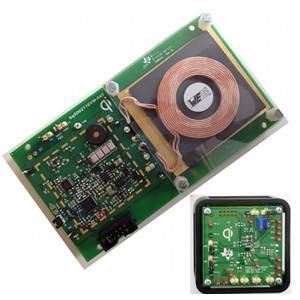
The term “wireless charging” usually refers to inductive charging. This technology uses a charging station that creates an alternating magnetic field. A device with the proper induction coil will receive energy from that field when it is placed nearby, making it receive power without a physical connection.

Cordless toothbrushes and other bathroom devices have used inductive charging for a long time. The technology has traditionally had problems with low efficiency and slow charging, but these were not considered a disadvantage for bathroom appliances that might be used for only a few minutes every day. Using inductive charging is safer, as well, because the conducting material is not exposed. Touch it with a wet hand? No problem.

Inductive charging is not magic. It needs specific hardware to function, and that hardware must be built into a device. Most devices do not have inductive charging coils built in to them, so a sleeve or adapter must be attached to enable inductive charging.

The Disadvantages Of Inductive Charging

wireless charging pads

Inductive charging relies on magnetic fields. These can be strong but often have a short range of effect unless an incredible source of magnetism is available (the Earth has a magnetic field only because it also has a huge molten metal core). Small inductive charging stations are no different.

Let’s use a wireless toothbrush as an example. You place it on the stand and it charges. The contact between your toothbrush and the stand is not responsible for charging, however. It just seems that way because the field used to charge the toothbrush is so weak that its range is best measured in millimeters.

Charge speed and efficiency remain problems, as well. Attempting to charge a device using induction charging just isn’t as efficient as a direct, physical connection.

And then there’s the inductive coil. Though small and becoming smaller, it’s still a sizable piece of kit relative to the space available in a modern smartphone, tablet or ultrabook. This is a problem that will diminish with time but is relevant to today’s devices.

Wireless Charging Comes To The Mass Market

wireless charging pads

The lack of a common standard is another reason why wireless charging never gained much traction in consumer electronics. It wasn’t so long ago that most devices still relied on Ethernet cords for data and mobile broadband was restricted to ridiculously slow speeds. Wireless charging did not seem important before wireless communications.

That has changed thanks to the Wireless Power Consortium and its Qi (pronounced “chee”) standard. The WPC is an industry organization sponsored by various companies all seeking a standard for wireless charging. Its members include every big name in the mobile market besides Apple.

I talked about Qi Wireless after attending CES 2012. I was able to see a number of working prototypes as well as existing products that used wireless charging. These prototypes and niche solutions are now becoming a reality is mass market products. Nokia, for example, recently announced is new Lumia 920 will have wireless charging built in. The less expensive Lumia 820 will have an optional shell that enables the technology.

It’s clear that there is a future for wireless charging. There’s a lot of industry support behind WPC and a desire to bring the feature to market. We’ll likely see a number of additional devices with wireless charging announced this year and next.

The Future Of Wireless Charging

wireless charging

Current inductive charging can be convenient, but the lack of range is a problem. It diminishes the technology to a convenience rather than a revolution.

Will this change? Maybe. There’s been plenty of research into the potential of long range wireless power and many different technologies have been used to achieve it. Lasers, microwaves and more powerful variants of inductive charging have been able to achieve longer transmission distances. Disadvantages have hampered wide-spread adoption. Tripping over a laser used for wireless power transfer, for example, could result in a vaporized foot.

It’s hard to say where a breakthrough in this field will come from. Apple is one candidate because the company has patented a device that can allegedly power devices at ranges up to one meter. The Wireless Power Consortium is also continually looking into better options. And then there’s Intel, who recently announced that it is working with Integrated Device Technology on a magnetic device that would be placed in a laptop and deliver power to nearby smartphones and peripherals.

Or a breakthrough could come from a small engineering company that’s barely known. This is a tough technical problem that will require both creative thinking and significant engineering know-how to solve. A major corporation may not be the first to find a solution.

Conclusion

Wireless charging has huge potential. This is why people have been working on it for well over a century. If we could move power without wires we’d be able to re-think not just consumer electronics but the infrastructure used by the entire human race.

Alas, we’re not there yet, but the renewed interest in this field brought by consumer electronics is appreciated. Perhaps the eternal quest of endless convenience can finally crack this technology wide open.

Matt Smith

Matthew Smith is a freelance writer living in Portland Oregon. He also writes for Digital Trends and runs a gaming blog called The Skill Point. You can follow him on Twitter or .

The comments were closed because the article is more than 180 days old.

If you have any questions related to stuff mentioned in the article or need help with any computer issue, just ask it on MakeUseOf Answers.

Hide 52 Comments

  • Xantes October 4, 2012
    0 likes

    Wireless charging could have come much, much earlier since the technology is out there for so many years! I have a portable blender since 1999 that incorporates not only the rechargeable batteries but also the technology to wirelessly re-charge them. Actually it should be called “cordless charging” since it’s not using any stable radio frequency to charge the re-chargeable batteries, but it’s uses the electromagnetic induction.
    If you ask me there was no interest in by the big mobile phones accessories manufacturers to design a cordless charger because a cordless charger would have been enough for all cordless charging fitted mobile phones to charge them all!
    Whereas now – not using cordless charging technology – each mobile phone manufacturer can and does produce its own charger bonding each phone by its own cord charger!

    | Like
    • Douglas Mutay October 31, 2012
      0 likes

      Yes, you’re right. Hopefully one day there will be one “charger to rull them all”
      Let’s wait and see!

      | Like
  • Usman Mubashir October 4, 2012
    0 likes

    for all those nerds who think wireless charging uses WiFi :p

    | Like
    • Ash October 5, 2012
      0 likes

      Good, you also got to know how it works.

      | Like
      • Usman Mubashir October 5, 2012
        0 likes

        I’ve spent hours trying to make them understand how this works, I don’t need to understand it any further, I have made some :p

        | Like
  • Robert Ruedisueli October 4, 2012
    0 likes

    In my experience, wireless charging tends to work better for low power devices such as video game controllers or short duty-cycle devices such as electric toothbrushes.

    The fact that these devices also don’t require charges higher than 250mA really makes it easier to use this technology.

    Electric toothbrushes often now use a core that extends up from the coil on the charger, through the coil on the device. This acts as both a holder and an efficiency booster.

    | Like
  • wilL Toxic October 4, 2012
    0 likes

    its come a long way from the powermat.. and also the ones that you can buy at the airports.

    Good Reading.
    thank you

    | Like
  • Yash Desai October 4, 2012
    0 likes

    2 words… Tesla Coils.
    PUT THEM EVERYWHERE!

    | Like
    • Marks2Much October 5, 2012
      0 likes

      Precisely. This is a form of Tesla technology, which is why it’s so slow to roll out. Tesla had his technology suppressed and he was eventually murdered to put a stop to what posed a threat to the energy sector, especially Big Oil. So you can bet this technology is only going to trickle out.

      | Like
      • Drew Butler October 7, 2012
        0 likes

        ^thank you both for pointing this out.. I was wondering if anyone was going to make the connection :)

        | Like
        • Joel October 8, 2012
          0 likes

          Thank goodness I wasn’t the first person to mention Nikola Tesla having been the creator of wireless electricity! You can see wireless electricity when you hold a CFL bulb within a few millimeters of a plasma lamp and it lights up! The higher the Voltage and Frequency, the further the impulse will travel with less dissipation!

          | Like
        • Migas Marques December 17, 2012
          0 likes

          I was wondering the same thing as well It’s sad how Tesla died being one of the greatest minds of all time but not getting the fame throughout the history.

          | Like
  • Mac Witty October 5, 2012
    0 likes

    sounds like heaven – not having to run after all these different chargers and cords that are always in the wrong place

    | Like
  • Nikhil Gupta October 5, 2012
    0 likes

    technology which take revolution in the mobile industry…

    | Like
  • Paul Burnett October 5, 2012
    0 likes

    Palm Pre and Pixie smartphones (and later the Palm TouchPad tablet) came with TouchStone wireless charging – Google “palm touchstone”.

    | Like
  • Benjamin Glass October 5, 2012
    0 likes

    If I’m not remembering incorrectly, a team at MIT managed to send power for a light bulb wirelessly over a distance of six feet–without endangering humans. It was called WiTricity.

    | Like
    • omar elshal October 6, 2012
      0 likes

      yep, ur right :)

      | Like
  • Stephan October 5, 2012
    0 likes

    Those wireless chargers will still need to be connected to wires. So much for the wireless-thing.

    | Like
  • Dimal Chandrasiri October 5, 2012
    0 likes

    what I exactly needed! I had no idea what wireless charging and I was like whaaaaaat….. now it’s all clear to me!

    | Like
  • Rob Hindle October 5, 2012
    0 likes

    It’s nothing new or clever, it’s just a transformer but the seconary winding is in the device to be charged. I’ve got a better idea – and a lot of new mobile devices (cameras, mobile phones) are adopting it: use micro USB (Apple, are you listening?). And you can use USB power with an adapter in the car. There is still the problem of too many varieties of USB connector though.

    | Like
  • Jacob Twitchel October 5, 2012
    0 likes

    I am surprised that it took this long to start getting wireless charging on devices like smart phones.

    | Like
  • ion popa October 5, 2012
    0 likes

    Thanks for info. This is the first explanatory article I read on subject.

    | Like
    • ed little November 26, 2012
      0 likes

      First explanatory article? Wheres the explanation, nothing is explained in this article.

      | Like
  • cwsnyder October 5, 2012
    0 likes

    With the present ‘inductive charging stations’ your wall wart would look like a marvel of efficiency. After all, a wall wart only consumes about 3W at standby and typically reaches near 80% efficiency. Inductive charging stations capable of charging a present cell phone would consume about 15W standby and reach about 60% efficiency at full load due to the poor coupling (present technology, including Tesla). This is progress?

    | Like
    • Drew Butler October 7, 2012
      0 likes

      interesting point

      | Like
  • Martin October 6, 2012
    0 likes

    While wireless seems like a good idea – I have two issues;

    1] How does it effect the compass IC in my phone. Most sources suggest that wireless charging might actually damage this sensitive device.

    2] Unless the phone comes with the induction coils built in – you usually have to install a glove with a built in connector. The bulk of the induction coil and the connector really alters the comfort factor of slipping the phone in my shirt pocket.

    | Like
  • Nohl Lyons October 6, 2012
    0 likes

    Back when I had a Palm Pre, it had a wireless charger with a serious magnet in it. It worked great. The phone was a bit small and kind of flimsy. I wish they could have stuck with it.

    | Like
  • Muhammad Idrees October 7, 2012
    0 likes

    It’s clear that there is a future for wireless charging. There’s a lot of industry support behind WPC and a desire to bring the feature to market. We’ are working in joine works at the works shops

    | Like
  • Jim Spencer October 7, 2012
    0 likes

    Excellent article guys! It is informative and let me know some things I did not already know, like the disadvantages associated with wireless charging! I think I will stick with the tried and true for the time being!

    | Like
  • druv vb October 8, 2012
    0 likes

    Wireless charging for all is much nicer than a corded charger for each device! But I suspect that the magnetic field generated by the charger will have some effect on the devices in the long run. But in the end, we might get a wireless charger without the physical contact.

    | Like
  • Kao Vang October 8, 2012
    0 likes

    Nice article. Sometimes I don’t know the science behind a technology if I don’t use it. I typically research the techs that I use. Very informative.

    | Like
  • Trevor Munson October 8, 2012
    0 likes

    I think this is what Tesla was working on a century ago.

    | Like
  • Anil Kumar October 9, 2012
    0 likes

    sounds good ….
    but what about the range …..???

    | Like
    • Matt Smith October 9, 2012
      0 likes

      The range is….very short. That’s why it’s not changing the world yet.

      | Like
      • James Bruce October 10, 2012
        0 likes

        Wasn’t there a demonstration on TED where they powered a TV from across the stage? That was awesome. I swear that was a thing.

        | Like
  • Harshit Jain October 9, 2012
    0 likes

    I want real wireless charging without vapourising my foot.

    | Like
  • shaurya gupta October 9, 2012
    0 likes

    Is the lumia wireless charging good?

    | Like
  • Asriel Allolinggi October 10, 2012
    0 likes

    I wish there will be new protocol to set up this New Technology..

    | Like
  • Abdullah Sorathia October 10, 2012
    0 likes

    Is It Possible to make similar charging mat at home..

    | Like
  • Sajid Mansoori October 10, 2012
    0 likes

    Thanks for a great article…

    | Like
  • Mark O'Neill October 10, 2012
    0 likes

    I have an inductive charging pad. The local cinema where my wife works was giving away Transformers (the movie) inductive charging pads as a promotional gimmick and I got my hands on one.

    I just have to pop my iPhone into a hard plastic case and then lay it on the pad. Bingo. It starts charging. No wires necessary :-) I love it.

    | Like
  • Debbie Strandberg October 10, 2012
    0 likes

    This is an interesting topic. First time I read about it.

    | Like
  • Omstavan Samant October 11, 2012
    0 likes

    These wireless charging devices are nothing but a waste… when we needed to use the phone while charging through with wires we needed to be near the plug point. the wireless charging concept cannot get rid of this so it is nothing but a waste…

    | Like
  • Dharmendra Dubedi October 11, 2012
    0 likes

    Nice charger its change 3d life

    | Like
  • Marc October 11, 2012
    0 likes

    The current technology sucks. Im glad the iphone 5 isnt only inductive charging. Think about trying to do anything while the battery is charging, you pick it up and it stops charging. Ill take the cord its not a big issue until they can get more range out of it.

    On the other hand there are a few times such as when i go to bed without my phone in hand (rarely) and i could just set it on the desk instead of reaching for the cord and plugging it in since its such a difficult task

    | Like
  • Marc October 11, 2012
    0 likes

    The current technology sucks. Im glad the iphone 5 isnt only inductive charging. Think about trying to do anything while the battery is charging, you pick it up and it stops charging. Ill take the cord its not a big issue until they can get more range out of it.

    On the other hand there are a few times such as when i go to bed without my phone in hand (rarely) and i could just set it on the desk instead of reaching for the cord and plugging it in since its such a difficult task

    | Like
  • Festim Bajgora October 11, 2012
    0 likes

    “Wireless charging has huge potential. This is why people have been working on it for well over a century. If we could move power without wires we’d be able to re-think not just consumer electronics but the infrastructure used by the entire human race”. Earlier on high school, my physics teacher told us that “wireless power” was an idea in the time of Tesla, but in that time it was impossible to make further researches for that technology because the church didn’t want to let this happen. Therefore, I would not be surprised if now, that technology comes in life.
    I just want to say, HAIL TO TESLA!

    | Like
  • kumar raja October 15, 2012
    0 likes

    I think This Technology will be useful in future

    | Like
  • Edward Bellair October 17, 2012
    0 likes

    Its about time they put this out. Are they looking at using this on a larger scale?( Hy-bred cars)

    | Like
  • Naoman Saeed October 20, 2012
    0 likes

    I heard that tesla invented a wireless electricity transmitter years ago

    | Like
    • ed little November 26, 2012
      0 likes

      Google search for:

      Wardenclyffe – A Forfeited Dream

      | Like
  • Migas Marques December 17, 2012
    0 likes

    You could also add a little bit of history referring to Nikola Tesla as “The father of induction”

    | Like